Padlet, discovering speech content

What is Padlet and how it works?
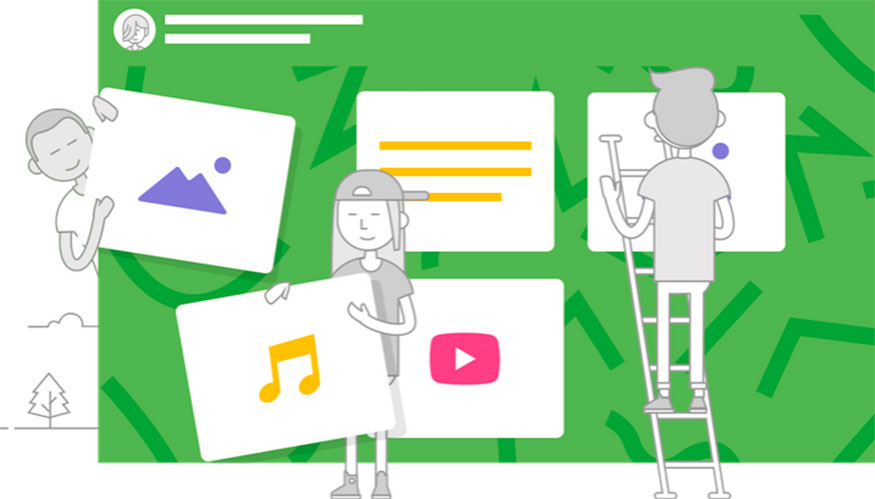
Padlet, previously known as Wall Wisher, is a free tool used to create an online bulletin board. It is used to provide information to its users on any topic. Information can be typed on the padlet. Students can record their voices to check for pronunciation errors. This is very helpful especially when they prepare for presentations or seminars. Hyperlinks can be provided for the learners to read further on a topic discussed either in the class or through the padlet. Images, links and videos can be uploaded on the padlet. Padlet wall can either be private, or open to the public. It can also be moderated by the person who has created it. The background of the padlet can be edited. This editing option available for editing the background creates interest to the readers. Background themes can be selected keeping in mind the latest technological, scientific, business and legal issues of the country. Posts can be added anywhere on the padlet, or can be posted one below the other or can be displayed in a grid-like layout. There are many options available for organizing the padlet. It can be made private, public, password protected or can moderate everything. If the wall is moderated by the teacher all contributions are approved by him/her before they are shown on the padlet.
Why is this particular tool or technology relevant to language learning? What approaches to language learning or research underpin the use of this technology?
Padlet is a very simple web tool which can be put into use by any teacher. To use a padlet one need not be very proficient in using computers. This tool can be used by teachers irrespective of their age group, knowledge of computers and experience. Padlet provides the students wonderful opportunity to learn continuously on wide range of topics, it also provides opportunities to the students to participate in various discussions. Thus, it provides both the teachers and the taught to teach and learn the language enthusiastically with ease, proving to be specially useful for a mixed ability classroom.
How might you use it to foster language learning? Think about your target audience.
Using Padlet, students can share their thoughts on any book they read. In fact, teachers can form a reading club of the class or college. Teachers can summarize large amount of information and present the same in a visually appealing manner to the learners. Teachers can post topics based on current issues or topics. This will enable the students to analyze an issue in various respects and post their opinions. Padlet gives an opportunity to the students to learn from each other. Gathering ideas and sharing ideas not only improves their perception, but will also enable them to look at a particular idea from various perspectives. Audio files and videos can be uploaded on the padlet. Thus the students get many opportunities to listen actively. Speaking activities like group discussions can be conducted in the classroom based on the information posted on the Padlet.
What limitations can you see with the use of this technology for the purposes of language learning?
Although proving to be versitile and useful in mixed classrooms, it does not engage students by itself, and it depends on the methodology that the teacher uses. If, for instance, paddlet is used with a Grammar-based approach, it will become part of the traditional classroom idea and students will reflect the same effect that in-class activities with such methodology. The methodology implemented by the teacher and the focus to wich Paddlet is used will encourage students to participate and develop communicative skills or discourage their participation if the topics, the review of every activity implemented or the focus of the class is now accurately adjusted to the students educational needs and interests in real-life situations.
References
Hockly Nicky, Teachers and technology, Modern English Teacher, 55-57, print.
Salaberry M. Rafeal, The Use of Technology for Second Language Learning and Teaching: A Retrospective, The Modern Language Journal 85(2001), 39-56 print.
- Sharma Ramnath& S.S. Chandra, Advanced Educational Technology, Vol.II, Atlantic Publishers
Tileston Donna Walker, What Every Teacher Should Know About Using Media and Technology: Corwin Press, California, 2004, print.
https://msdlt.instructure.com/courses/1092/pages/what-is-padlet
http://www.coolcatteacher.com/how-to-use-padlet-fantastic-tool-teaching/
Comentarios
Publicar un comentario