Redlang- The helpful assistant to read
What is Redlang?
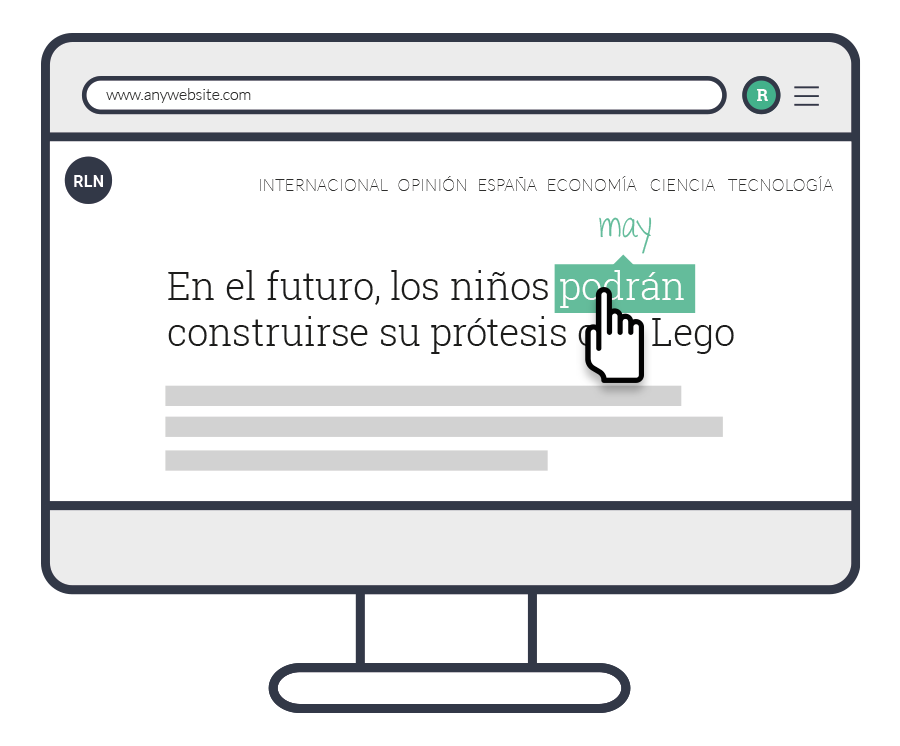
Readlang is a website which engages individuals from different ages to learn how to read in different languages, such as English, German, Spanish and so on. This is accomplished by selecting from the wide list of texts that introduce these languages from beginner level up to reach a level where people develop complex reading abilities; these texts vary in topics that go from fiction to conversations and dialogs. Moreover, this tool is useful to learn new words and vocabulary due to its translating function in real-time whenever you click on a word you don’t know, helping students get through texts quicker and making these reading tasks less stressful.
What’s more, all the words you select get added to a word list and the application automatically generates flashcards which can be used for review. Each flashcard is displayed with the sentence in which you first encountered the word so it doesn’t become decontextualized. Selecting a response to “Did you remember?” determines the frequency that the word will get repeated when you try to practice the words using the flashcards.
How is it works?
The website has a variety of texts where students can choose between a passage of a book or an article of their interest to learn the language in a meaningful way. Readlang shows a step by step translation by clicking on the words that we do not know; furthermore within the text there is a sidebar on the right side where you find the dictionary that is helpful to obtain synonyms of the selected word. Redlang has the option to choose the language that the individual wants to learn and at the end of reading we have flashcards with the words chosen by us from the writing to try to remember the meaning of each one.
Why is this particular tool or technology relevant to language learning? What approaches to language learning or research underpin the use of this technology?
This digital tool can help support extensive reading activities which learners do in their own time and potentially promote learner autonomy. Attempting to include these sorts of activities because extensive reading appears to have a significantly positive impact on overall language learning (Nation, 2001).
How might you use it to foster language learning? Think about your target audience.
How is a tool attractive to the audience of all ages able to adapt the language into our mother tongue in a way, in which the user has to click on the unknown word to find out the correct meaning, the same way it is affordable to learn for free reading texts of community’s interest. The dynamic assists to gain a satisfactory learning of those that want to achieve and commit to acquire as much knowledge as users can.
What limitations can you see with the use of this technology for the purposes of language learning?
As useful as Readlang is, there are some issues to be aware of when selecting texts for these extensive reading activities. Nation (2001) distinguishes between extensive reading for language development and extensive reading for fluency development. Both types of reading require texts which are appropriate for the learners’ language level. However, with reading for fluency development, Nation (2001) recommends that there ought to be little or no unfamiliar vocabulary in the texts you ask learners to read. With extensive reading for language development, between 95 and 98 percent of the words in the text should be familiar to learners for effective vocabulary growth (Nation, 2001).
The ease of using Readlang to look up words often leads to learners clicking every other word, making these reading activities less meaningful. But finding level-appropriate authentic digital texts can be really challenging and ensuring that no more than 5% of the vocabulary is unfamiliar, a seemingly impossible task. This problem may be addressed by doing some learner training and raising awareness of the drawbacks of an over-reliance on one click translations while also giving learners practice with guessing meaning from context. This too correlates with some of Nation’s (2015) ideas about dictionary use during extensive reading.
References
Nation, I.S.P. (2001) Learning Vocabulary in Another Language. Cambridge University Press: Cambridge.
Nation, I.S.P (2015) Principles guiding vocabulary learning through extensive reading. Reading in a Foreign Language. April 2015, Volume 27, No. 1. Available at http://nflrc.hawaii.edu/rfl/April2015/discussion/nation.pdf [Downloaded 9 May 2019]
Comentarios
Publicar un comentario